What matters
- Outdoor 'living rooms' are the single most requested project type heading into 2026, cited across multiple industry sources including Unilock and the National Association of Landscape Professionals.
- Naturalistic landscaping and authentic natural materials are replacing manicured, high-maintenance designs - meaning crews need to adjust plant sourcing, installation methods, and client consultations accordingly.
- Colored mulch, oversized artificial lawns, and pollarded trees are being flagged by design experts as trends to actively steer clients away from, creating an opportunity for landscapers to differentiate through honest, expert-led guidance.
Homeowners are walking into landscaper consultations in 2026 with a clearer vision than ever before, and that vision centers on functional outdoor living, natural materials, and sustainability. Multiple industry sources, from hardscape manufacturer Unilock to the National Association of Landscape Professionals, are pointing to the same cluster of trends reshaping project scopes, material orders, and client expectations this season. For working landscapers, understanding exactly what is driving these shifts is the difference between leading a conversation and chasing one.
The Outdoor Living Room Is Now a Standard Request
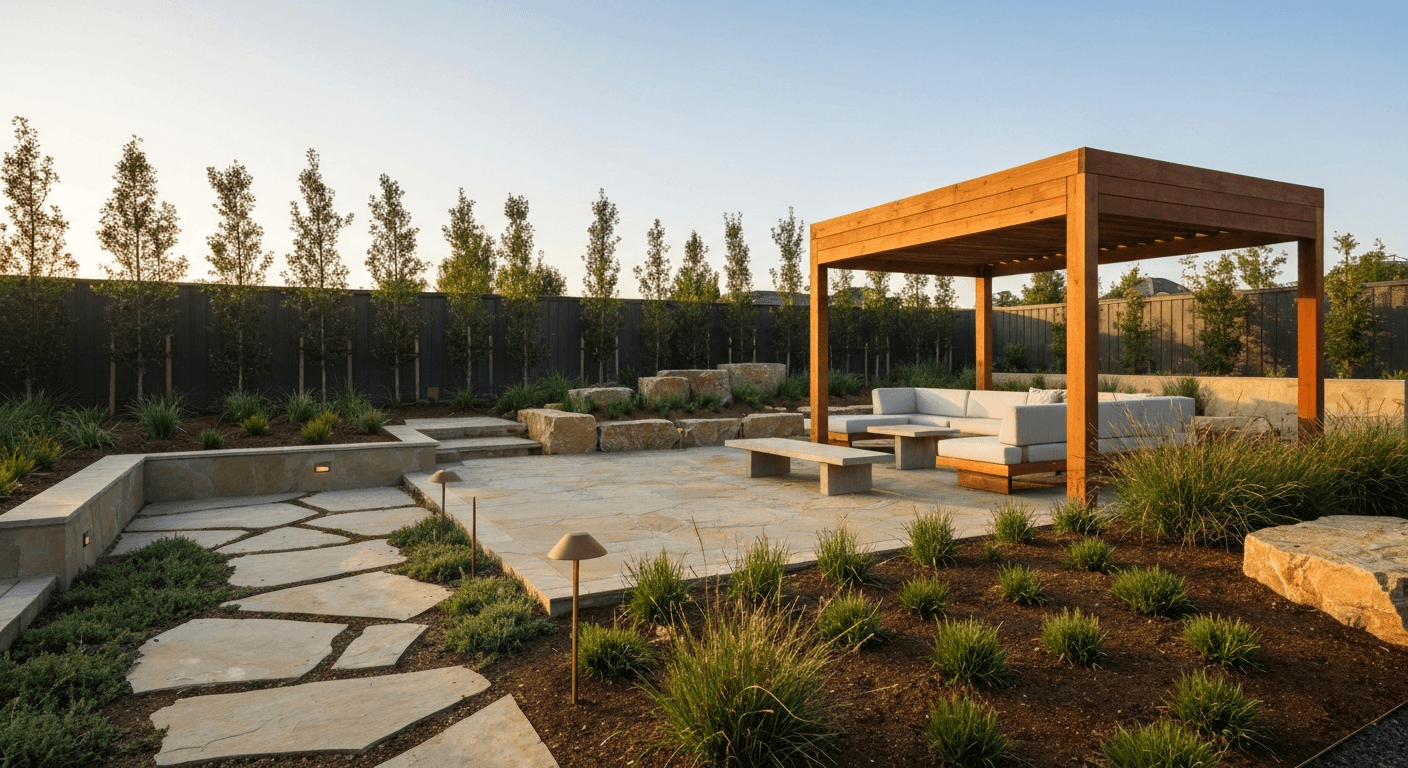
What was once an upsell is now a baseline expectation. According to Unilock's 2026 trend report, outdoor spaces designed as functional "living rooms" - complete with seating areas, fire features, shade structures, and defined zones for cooking and dining - are the dominant request category heading into the season. The National Association of Landscape Professionals echoes this, listing "Defined Outdoor Rooms" and "Seamless Transitions" between indoor and outdoor spaces as two of the five biggest design forces shaping projects this year.
This shift has real business implications. Projects anchored around outdoor rooms tend to carry higher material costs, longer installation timelines, and greater design complexity. That means higher average ticket values, but also greater demand on estimating accuracy and crew coordination. Landscapers who have not yet built out their hardscape capabilities or subcontractor relationships for features like pergolas, built-in grills, and low-voltage lighting are increasingly being asked to refer that work elsewhere - or lose the full project to a competitor who can handle it.
The trend also rewards photography. Finished outdoor living spaces photograph well and generate strong referral activity when homeowners share completed projects on social platforms. Landscapers who document this work carefully are building a visual portfolio that directly feeds future sales cycles.
Naturalistic Design Is Replacing the Manicured Lawn Ideal
Across multiple sources - including ELLE Decor's spring 2026 garden coverage and the Bee Green industry blog - naturalistic landscaping is emerging as the defining aesthetic shift of the year. Homeowners are moving away from symmetrical, high-maintenance designs toward layered plantings that mimic natural ecosystems. Native plants, pollinator gardens, groundcovers that replace traditional turf, and "rewilded" lawn edges are all growing in demand.
Southern Living Plants points to resilient, non-toxic groundcovers as a particular standout, especially for clients with pets or sustainability goals. The Bee Green report also highlights edible landscaping - vegetables, herbs, and fruit-bearing plants integrated into ornamental beds - as a fast-growing request category, reflecting both economic pragmatism and a broader cultural interest in self-sufficiency.
For landscapers, this represents a meaningful change in plant sourcing strategy. Native species are not always available in bulk through standard wholesale channels, and naturalistic installations require a different installation rhythm than traditional bed work. Crews accustomed to clean edge lines and uniform planting grids may need guidance on the intentionally informal look clients are now requesting. This is also a design category where client education pays off: explaining the ecological and maintenance benefits of a naturalistic approach builds trust and reduces callback risk when the design looks intentionally loose rather than unfinished.
The sustainable hardscape angle connects here too. Permeable pavers, rainscaping features, and materials with lower embodied carbon are all gaining ground according to the Bee Green spring trends roundup. These choices often align naturally with naturalistic planting schemes and give landscapers a coherent sustainability narrative to present to clients who prioritize environmental impact.
Trends Experts Say Landscapers Should Push Back On
Not every client request in 2026 deserves a "yes." Veranda's reporting on the worst landscaping trends of the year is worth taking seriously, because it represents the kind of guidance that positions a landscaper as a trusted expert rather than just an order-taker.
The three trends that design professionals are actively flagging as problems include:
- Colored mulch - dyed mulch products that look artificial and fade unevenly, drawing attention away from the plants they are meant to accent.
- Oversized or artificial lawns - large synthetic turf installations that raise heat island concerns, create drainage issues, and are increasingly viewed as environmental liabilities by neighborhood associations and local municipalities.
- Pollarded and pleached trees - aggressive pruning techniques that, when applied incorrectly or in the wrong contexts, damage tree health and produce an aesthetic that many homeowners later regret.
Landscapers who can articulate why these approaches carry risk - and offer better-performing alternatives - are delivering real value that goes beyond installation labor. That kind of consultative approach also tends to reduce warranty and callback issues down the line.
Why This Matters for Landscapers
The convergence of these 2026 trends points to a market that is rewarding specialization, design fluency, and proactive client education. Homeowners are more visually literate than they were five years ago, arriving at consultations with mood boards pulled from social platforms and a clear sense of the aesthetic they want. Landscapers who stay current on what those aesthetics look like - and who can speak credibly to both the design and the long-term performance of those choices - are consistently winning higher-value projects.
The trend away from high-maintenance, purely ornamental designs also creates a meaningful opportunity for recurring service contracts. Naturalistic plantings and edible gardens require different maintenance rhythms than traditional turf and annual beds, and clients who invest in these spaces often want ongoing professional care. That translates to more predictable revenue for landscaping businesses willing to build out a maintenance tier.
It is also worth noting that the outdoor living room trend aligns directly with the broader home improvement spending patterns seen across the trades this year. Homeowners who are delaying moves due to mortgage rates are investing heavily in making existing outdoor spaces more functional. As covered in related coverage of general contractor demand pressures in 2026, discretionary home improvement budgets are being concentrated rather than distributed - meaning clients are doing fewer projects but spending more on the ones they commit to. Landscapers positioned for larger, more complex outdoor living installations are well-placed to capture that spending.
Finally, the rise of clearly identifiable "trends to avoid" is a competitive differentiator in itself. During high-demand periods, clients are increasingly choosing contractors based on perceived expertise as much as price. A landscaper who can confidently explain why colored mulch is a short-term choice and suggest a better alternative is demonstrating the kind of judgment that earns referrals.
The 2026 design landscape rewards landscapers who invest in staying current - on plant palettes, material options, and the honest conversations that steer clients toward results they will be proud of long after installation day. Those who treat trend awareness as a core business skill, not an afterthought, are the ones building the kind of reputation that fills schedules before the season even starts.