What matters
- Commercial cleaning operations using smart IoT and AI-integrated equipment report up to a 51% boost in operational efficiency and a 25% reduction in costs, according to Gentle Cleaners LLC's 2026 field data.
- AI-powered scheduling and quoting tools purpose-built for cleaning businesses are now widely available, with platforms like FieldVibe offering free tiers for solo operators and paid plans starting at $50/month for growing teams.
- Robotic cleaning tools and voice-activated command systems are moving from pilot programs into mainstream use in 2026, creating a competitive divide between early-adopting businesses and those still relying entirely on manual processes.
Cleaning businesses that have integrated AI-driven scrubbers, IoT sensors, and real-time operational dashboards are reporting cost reductions of 25% and efficiency gains of 51%, according to 2026 field data from Boston-based operator Gentle Cleaners LLC. Those numbers are pulling attention across the entire industry, from solo residential cleaners to large commercial contractors, as technology vendors race to make these tools accessible at every price point.
What Is Driving Adoption in 2026
The push toward smart cleaning technology is not coming from a single direction. Labor shortages, rising supply costs, and client demand for documented, verifiable cleaning outcomes are all converging at once. Commercial clients, particularly in healthcare, hospitality, and office facilities management, are increasingly requiring proof of service completion and sanitation compliance. IoT-connected equipment addresses that need directly by logging cleaning activity automatically and sending real-time data to client-facing dashboards.
Nilfisk, one of the largest commercial cleaning equipment manufacturers globally, identified AI-driven floor scrubbers and IoT connectivity as the top two technology trends shaping the professional cleaning industry this year. Their 2026 industry report highlights autonomous navigation, sensor-triggered chemical dispensing, and remote fleet monitoring as the features gaining the most traction among mid-sized and enterprise cleaning contractors. These are no longer experimental features reserved for large facility management companies. Increasingly, they are standard specifications on new equipment purchases.
On the residential side, the driver is different but equally urgent. Clients are comparing providers online before they ever pick up the phone, and businesses that can demonstrate consistent, tech-enabled processes are earning the reviews and referrals that drive growth. That dynamic is pushing even small operators to evaluate where technology can reduce inconsistency and improve the client experience.
The Tools Making the Biggest Impact
Three technology categories are generating the most discussion among cleaning business operators right now.
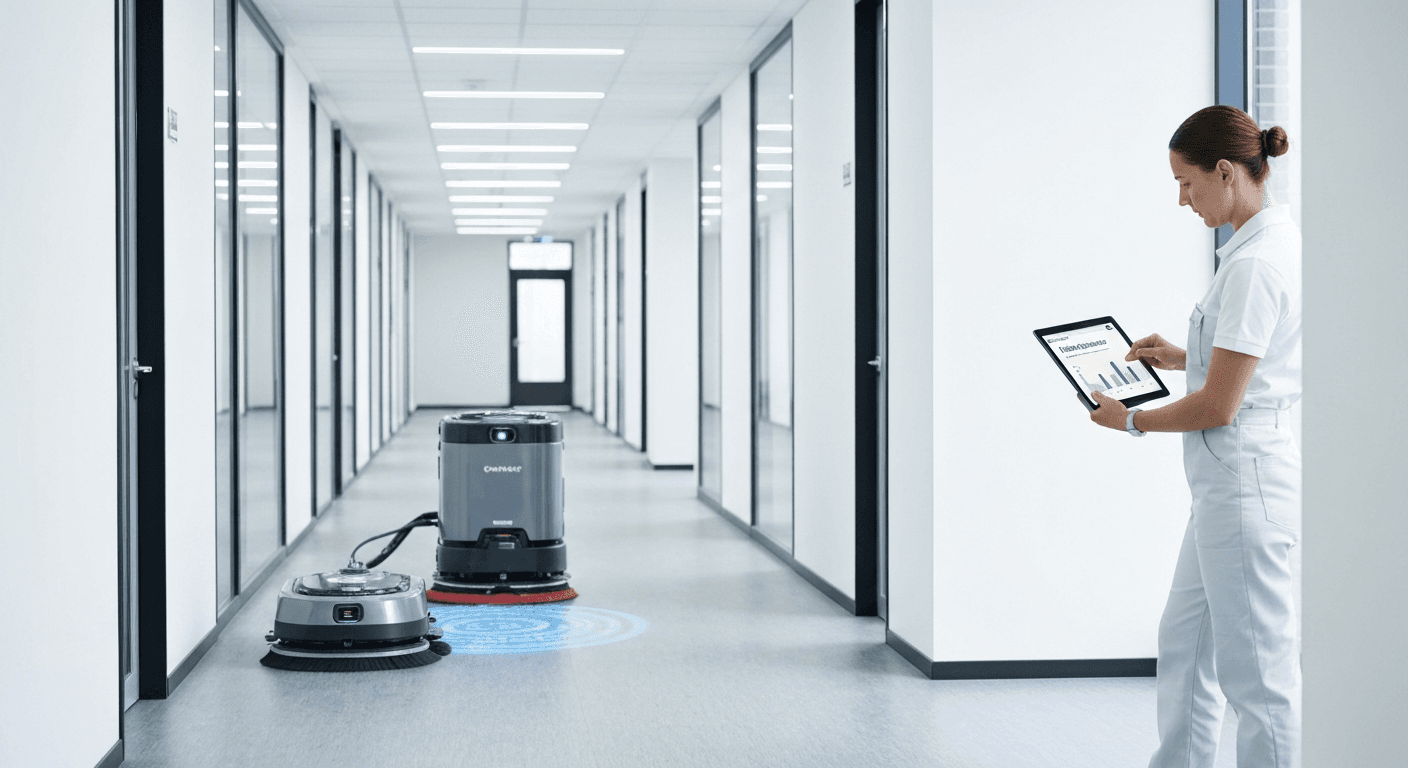
- Autonomous and semi-autonomous cleaning robots: Floor scrubbers and vacuuming units with AI-guided navigation are being deployed in commercial settings to handle routine square footage, freeing human crews for detail work, high-touch surfaces, and client communication. The Joy of Cleaning's 2026 trend report notes that robotic tools are no longer limited to large-footprint warehouses and airports. Smaller commercial accounts, including retail spaces and medical offices, are becoming viable deployment targets.
- IoT-connected equipment and sensors: Sensors embedded in restrooms, kitchens, and high-traffic areas track usage and trigger cleaning requests based on actual conditions rather than fixed schedules. This shifts cleaning from a time-based model to a condition-based one, reducing both under-cleaning and unnecessary service visits. For contract cleaning companies, this data also strengthens renewal conversations by showing measurable outcomes.
- Voice-activated cleaning commands: While still emerging, voice-activated interfaces are appearing in both consumer-grade tools and professional platforms. These allow crew members to log task completions, flag issues, and receive job instructions hands-free, reducing the friction of mid-job data entry and improving compliance with service checklists.
The Software Side of the Equation
Hardware is only part of the story. The operational software layer is where many cleaning businesses are finding the fastest return on investment in 2026. Purpose-built platforms for the cleaning industry now offer AI-assisted scheduling, automated quoting, route optimization, and client communication tools that were previously available only through expensive custom builds or enterprise-tier software.
FieldVibe's 2026 ranking of cleaning business software identified free-tier options viable for solo operators alongside team-oriented platforms like Jobber that scale with headcount. Separately, platforms such as QuoteIQ are targeting the quoting and lead conversion side of the business, using AI to generate estimates faster and reduce the time between inquiry and booked job.
The competitive implication is significant. A solo operator using AI-assisted quoting and automated follow-up can respond to leads within minutes, while a competitor handling the same workflow manually may take hours. In a market where cleaning industry growth projections through 2034 are strong, the businesses that convert inquiries fastest are likely to capture a disproportionate share of new clients.
Operators evaluating these tools should also consider how software integrates with their client-facing presence. Consistent, prompt communication after service visits plays a meaningful role in whether satisfied clients leave reviews. How a business communicates after a service call is increasingly as important as the quality of the clean itself when it comes to earning referrals and repeat bookings.
Why This Matters for Cleaning Services
The efficiency gains being reported by early adopters are large enough that technology adoption is shifting from a competitive advantage to a competitive necessity. A 25% cost reduction in a margin-sensitive industry is not incremental. It is the difference between a business that can absorb wage increases and supply cost fluctuations and one that cannot.
For residential cleaning operators, the most accessible entry points are on the software side. AI-assisted scheduling, automated reminders, and digital checklists require no capital equipment investment and can be implemented immediately. For commercial contractors, the equipment investment calculus is becoming easier to justify as robotic units come down in price and IoT connectivity becomes standard rather than premium on new equipment purchases.
The divide that is opening in 2026 is not between large and small operators. It is between operators who are actively evaluating these tools and those who are not. A two-person residential cleaning business using AI quoting software and automated client communication is already operating more efficiently than a ten-person team managing the same workflows on paper and phone calls.
The businesses that take time now to identify which technology gaps are costing them the most, whether that is slow quoting, inconsistent scheduling, or missed follow-up, and address those gaps systematically will be better positioned when the next wave of competition arrives in their local market.