What matters
- According to Bootlegged Barber Co. 2024, handling complaints with empathy and a clear solution often creates stronger loyalty than if the service issue had never occurred in the first place.
- According to the National Barbers Association 2024, consistent customer satisfaction practices including follow-through on complaints are directly linked to repeat visit rates and word-of-mouth referrals in competitive local markets.
- Barbershops that respond publicly to negative Google reviews signal responsiveness to prospective clients reading those reviews, which affects booking decisions before a new client ever walks in the door.
A client walks out unhappy, and most barbershop owners assume that client is gone for good. According to Bootlegged Barber Co. 2024, that assumption is wrong. Handling complaints with genuine empathy, ownership, and a focused solution often creates more loyalty than if the problem had never happened at all. That finding has real consequences for how shops should train their barbers, respond to reviews, and think about service recovery as a business system rather than an awkward one-off.
- What does a complaint actually cost a barbershop that ignores it?
- How should barbers handle complaints directly in the chair?
- What about complaints that show up as Google reviews?
- Why This Matters for Barbershops
What does a complaint actually cost a barbershop that ignores it?
The visible cost is one lost client. The less visible cost is what that client tells other people and what they post online. According to the National Barbers Association 2024, word-of-mouth remains one of the top drivers of new client acquisition for independent barbershops, which means a single unresolved complaint can quietly block several future bookings you never knew you were losing.
There is also the review trail to consider. A one-star review with no response from the shop tells every prospective client who reads it that the owner either does not care or is not paying attention. Either reading hurts. How star ratings affect booking decisions is well documented at this point, and barbershops competing for new clients in a local map pack cannot afford a pattern of silent negative reviews sitting on their profile.
The math is worth internalizing: a client who books every four weeks is worth roughly thirteen visits a year. If your average ticket is forty dollars, that is over five hundred dollars annually from one person. Losing that client over a complaint that could have been handled in three minutes is an expensive shortcut.
How should barbers handle complaints directly in the chair?
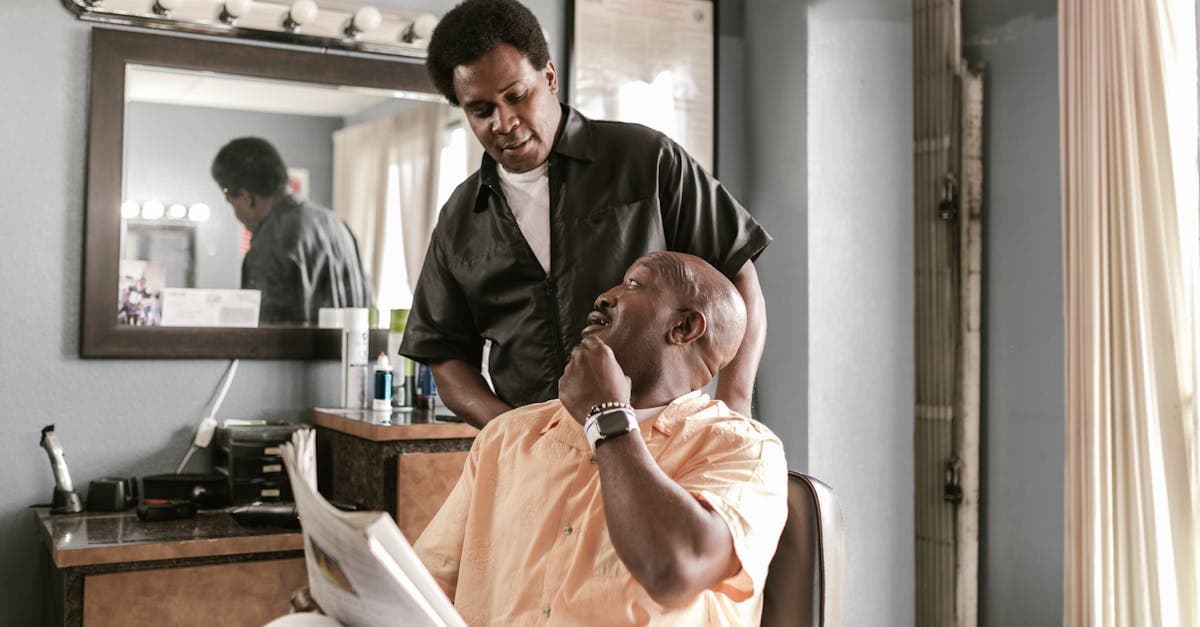
According to Bootlegged Barber Co. 2024, the three-part framework that consistently works is: listen without interrupting, take clear ownership of the issue, and move immediately to a solution. What does not work is deflecting, explaining why the client is wrong, or offering a vague apology with no follow-through.
In practice, that looks like this. A client says the fade does not look right. The barber stops, acknowledges what they are hearing without getting defensive, and asks what specifically they would like fixed. If it can be corrected on the spot, it gets corrected. If it cannot, the shop offers a complimentary touch-up at the next visit and the owner or lead barber follows up personally.
That last part matters more than most shops realize. According to the National Barbers Association 2024, personal follow-through on a complaint is one of the behaviors most directly associated with a client returning after a negative experience. A text or a quick call two days later asking whether everything looked right is a low-effort move that most shops skip and almost none of their competitors are doing either.
One practical note: train every barber in this framework, not just the owner. Complaints happen when the owner is cutting someone else, and the response should not depend on who is available.
What about complaints that show up as Google reviews?
Complaints that go online require a different but equally deliberate response. The audience is not just the person who left the review. It is every prospective client who reads it before deciding whether to book. According to Bootlegged Barber Co. 2024, how a business responds to public criticism tells onlookers as much about the shop as the original complaint itself.
A response that acknowledges the experience, avoids arguing, and invites the client to come back or talk directly signals maturity and professionalism to everyone reading. That signal converts skeptical first-time visitors into actual bookings. Following up with clients after their visit is also one of the simplest ways to catch dissatisfied customers before they post publicly, giving you a chance to resolve the issue privately first.
Shops that respond to all reviews, positive and negative, also tend to rank better in local search over time. Google treats review activity, including owner responses, as an engagement signal. Ignoring reviews is not a neutral act.
Why This Matters for Barbershops
Barbershops operate in a high-repeat, high-referral business model. A single chair can hold the same thirty to fifty clients on a reliable rotation, and losing even five of them to unresolved complaints is a meaningful revenue problem compounded over twelve months. The good news is that service recovery is one of the few places where doing the right thing and doing the profitable thing are exactly the same.
According to Bootlegged Barber Co. 2024, clients who have had a complaint resolved well often become more loyal than clients who have never had a problem at all. That loyalty shows up in rebooking rates, referrals, and the kind of detailed five-star reviews that actually move prospective clients off the fence.
The shops that will win market share in a competitive local barbershop environment are not necessarily the ones with the most talented barbers. They are the ones that handle the hard moments well and make sure those moments get documented as positive outcomes rather than silent defections or one-star reviews. Building a repeatable complaint-handling process is not a customer service nicety. It is infrastructure.