Key Takeaways
- According to CleanNet USA 2026, measurable cleaning performance and accountability rank as the top commercial cleaning trend of the year, ahead of green cleaning and smart technology adoption.
- According to the Interclean Show Trend Report 2026, businesses that combine data systems with capable frontline teams are positioned to outpace competitors who rely on traditional inspection checklists alone.
- According to Jani-King 2026, January and February represent peak opportunity windows for commercial deep cleaning contracts, with facility managers actively planning budgets and scheduling flexibility at its highest during this period.
Facility managers are no longer satisfied with a completed checklist and a signature on a service log. According to CleanNet USA 2026, measurable cleaning performance and accountability rank as the single most important commercial cleaning trend of the year, outpacing green cleaning, targeted disinfection, and smart technology as the primary concern for building managers entering new vendor contracts. The shift is structural, not seasonal, and it is hitting independent operators where it hurts most: at the bid table.
What Accountability Means Now
The word "accountability" has circulated in facility management circles for years, but its practical definition has changed significantly. According to the FM Newsroom 2026 report "The Clean Shift," facility managers and cleaning professionals must now align people, data, and technology together to remain competitive. That means documentation systems, service verification tools, and outcome tracking are no longer optional add-ons for enterprise-level contracts. They are table-stakes requirements trickling down to mid-market and even small commercial accounts.
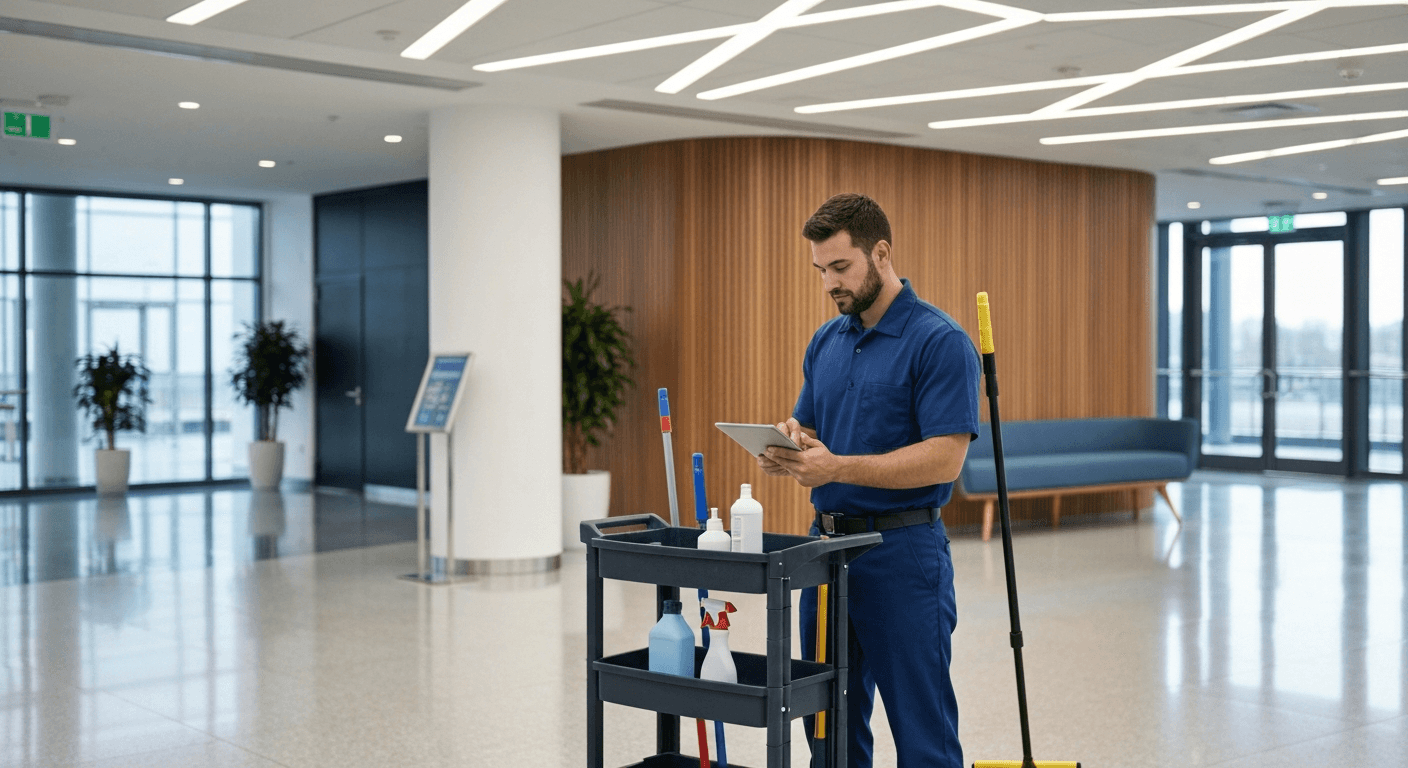
What this looks like in practice: clients want to see cleaning logs tied to timestamps, photo verification of high-touch surface protocols, and in some cases, ATP testing results that confirm pathogen reduction rather than simply confirming that a technician showed up. The old model of "we cleaned it, trust us" is giving way to "here is what we cleaned, when, and here is the data to prove the outcome." Cleaning operators who adopt this posture early gain a significant advantage when renewals and new bids come up for discussion.
Technology Is the Dividing Line
According to the Interclean Show Trend Report 2026, consumer behavior and market forecasts both point toward technology adoption as the key separator between growing cleaning businesses and stagnating ones. The report identifies businesses that combine smart systems with capable frontline teams as those best positioned to grow in 2026. This is not an argument for replacing workers with robots. It is an argument for equipping field staff with tools that generate verifiable records automatically.
For commercial cleaning operators, this practically means investing in mobile service apps that log job completion with GPS and time data, digital inspection forms that replace paper checklists, and client-facing portals where facility managers can view service history without making a phone call. These tools exist at a range of price points, and many are accessible to small independent operators. The gap between adopters and non-adopters is widening, and according to Interclean 2026, that gap is increasingly reflected in contract win rates.
The parallel to other service industries is worth noting. Similar technology-driven accountability shifts have reshaped how AI, IoT, and robotics are entering cleaning operations at the enterprise level, and that pressure is now filtering into the commercial mid-market where most independent operators compete.
Budget Cycles and Contract Timing
According to Jani-King 2026, January and February are the highest-value months for commercial cleaning operators to pursue deep cleaning contracts and new account acquisition. Facility managers are actively executing annual cleaning budgets, scheduling flexibility is at its peak before spring operational demands kick in, and decision-makers are most receptive to new vendor conversations at the start of a fiscal calendar. Operators who lead with data-driven proposals during this window position themselves against competitors who still rely on price-per-square-foot alone as their selling point.
This timing insight matters beyond January. It signals that commercial cleaning operators need a year-round business development rhythm, not a reactive one. Waiting for a client to call with a problem is a losing strategy when competitors are proactively presenting measurable performance histories and service dashboards to the same facility managers.
Green Cleaning and Air Quality as Supporting Pillars
According to Ascent Building Service 2026, seven commercial office cleaning trends are reshaping workplace health priorities, with indoor air quality and green cleaning products ranking prominently alongside smart technology. Facility managers are increasingly asked by their own tenants and employees to demonstrate environmental responsibility in building maintenance, and cleaning vendors who can document product certifications, chemical reduction protocols, and air quality improvement outcomes hold a differentiated position.
This does not require a full product overhaul. Many certified green cleaning products are cost-competitive with conventional alternatives. The differentiator is the documentation and the ability to present it to clients as part of a regular service report. Operators who frame green cleaning as a measurable outcome rather than a marketing claim are better positioned to justify premium pricing and retain health-conscious commercial accounts.
Why This Matters for Cleaning Services
The commercial cleaning market in 2026 is not simply rewarding operators who clean well. It is rewarding operators who can prove they clean well, consistently, and in ways clients can track without picking up the phone. The accountability trend identified by CleanNet USA 2026 as the year's top priority is a business model challenge as much as an operational one. Operators who treat service documentation as a back-office burden will lose ground to competitors who treat it as a client retention and sales tool.
Independent cleaning businesses face a specific risk here: franchise networks and regional operators are investing in these systems at scale, which means the documentation gap between large and small operators is growing. Closing that gap does not require enterprise software budgets. It requires choosing tools deliberately, training field staff consistently, and making service verification a visible part of every client interaction. Operators who can show a facility manager a clean, timestamped service history at a contract renewal meeting are having very different conversations than those who cannot. Understanding how labor strategy connects to service consistency is a parallel concern that directly affects whether accountability systems can be sustained over time.
The operators who will win the most commercial contracts in 2026 are those who treat measurable performance not as a compliance burden but as a competitive asset. Start with one verifiable data point per job visit, build client-facing reporting into your service agreement, and let the documentation do the selling that price alone cannot.
Sources