What matters
- Emergency tree removal leads require response times measured in minutes, not hours, because customers in crisis hire the first qualified company that answers, according to ArboStar.
- Companies that appear in local search results during off-hours emergency queries, including midnight and 9 PM searches, capture a disproportionate share of high-value storm damage jobs, according to ResultCalls.
- Tree service companies that combine Google Ads, Local Services Ads, and strong review profiles are capturing emergency leads that operators relying on word-of-mouth alone are systematically missing, according to ArboStar.
Emergency tree removal leads convert at higher rates than almost any other job category in the trade, but the window to capture them is brutally short. According to ArboStar 2024, emergency removal leads need response times measured in minutes, not hours, because a homeowner with a tree on their roof is not comparison shopping. They are hiring the first qualified company that picks up.
- Why Do Emergency Leads Convert Differently Than Routine Jobs?
- When Are Homeowners Searching for Emergency Tree Service?
- How Do Tree Service Companies Get Found During Off-Hours Emergencies?
- Why This Matters for Tree Service Companies
Why Do Emergency Leads Convert Differently Than Routine Jobs?
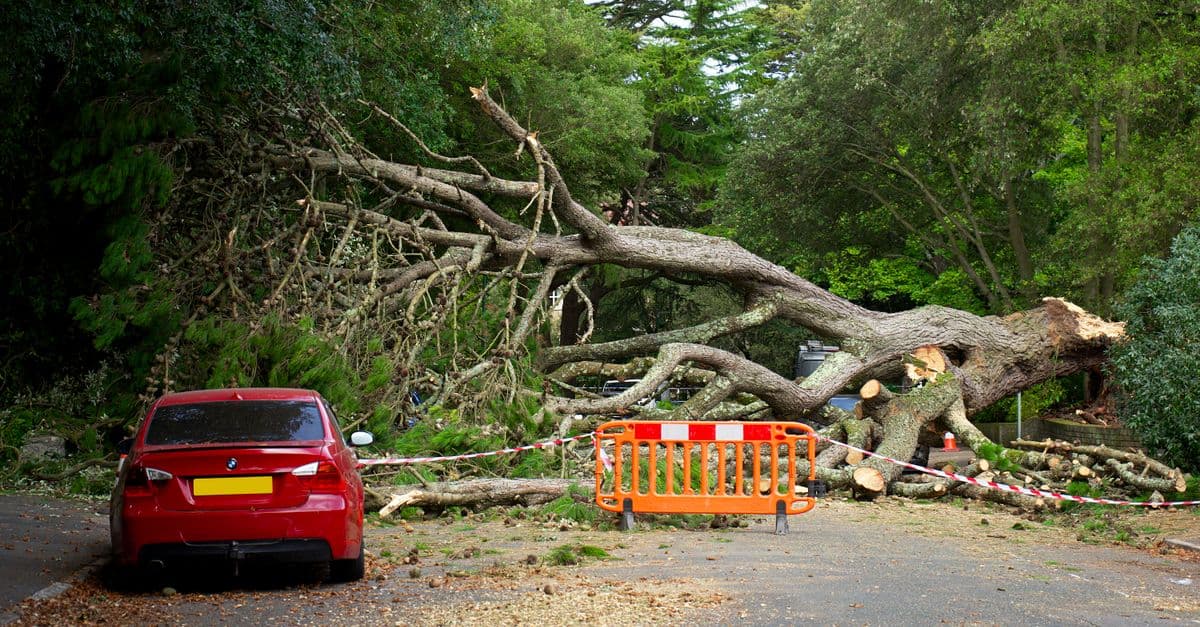
Most service calls involve some level of homeowner deliberation. They get three quotes, check reviews, ask a neighbor. Emergency tree removal skips most of that. A storm drops a 60-foot oak onto a fence line at 10 PM, and the homeowner needs someone tonight. That urgency collapses the normal buying cycle.
According to ArboStar 2024, emergency tree removal leads convert at higher rates precisely because the customer is not weighing options the way they would for a routine trimming job. The job also tends to be larger in scope and dollar value, which means missing one emergency call during a storm event can cost a company several thousand dollars in a single night.
The implication for tree service operators is straightforward: your ability to capture emergency demand depends less on your pricing and more on whether you are reachable and visible at the moment someone needs you. That means phone coverage, online presence, and search visibility all have to work together after business hours.
When Are Homeowners Searching for Emergency Tree Service?
Storm damage does not respect business hours. According to ResultCalls 2024, emergency tree removal searches spike at midnight and 9 PM, well outside the window when most small operators are actively monitoring their phones or ad campaigns. Companies that are not set up to capture leads during those hours are effectively invisible when demand is highest.
This is where the gap between digitally active operators and those running on referrals alone becomes a real revenue problem. A referral network is valuable for filling a schedule with routine work. But referrals rarely fire at midnight during a windstorm. Search does.
The pattern also has implications for how tree service companies should think about their Google Business Profile. A profile that goes dark after 5 PM, has no after-hours contact option, and has not been updated with services or photos in months will rank poorly in exactly the searches that carry the highest conversion rates. Related coverage on what happens when a Google Business Profile goes dark illustrates how quickly visibility can collapse.
How Do Tree Service Companies Get Found During Off-Hours Emergencies?
According to ResultCalls 2024, the combination of Google Ads, Local Services Ads, and organic local SEO is what puts a tree service company in front of homeowners running emergency searches. Each channel serves a different part of that window.
Google Local Services Ads (LSAs) are particularly relevant here because they surface at the top of results with a verified badge and a direct call button. For a homeowner searching at midnight, that call button matters more than a well-designed website. According to ArboStar 2024, six proven lead generation approaches for tree service companies all reinforce the same underlying point: qualified leads come from being visible at the right moment across multiple channels simultaneously.
Reviews also function as real-time trust signals during emergency searches. A homeowner who finds two companies in the map pack at 11 PM is going to call the one with 80 recent reviews over the one with 12. The volume and recency of your review profile affects whether you get the call before your competitor does. Operators looking at the full picture of how reviews and Google profiles drive tree service leads will find the dynamics consistent across storm and non-storm demand cycles.
Beyond ads and reviews, there is a phone coverage question that many small operators have not resolved. If your cell goes to voicemail at 10 PM during a storm, the lead goes to the next result. Some operators are using answering services or automated response tools to capture that call and at minimum gather the homeowner's name, address, and job description until a crew can follow up at first light.
Why This Matters for Tree Service Companies
Emergency tree removal is not just a revenue category. It is a reputation builder. A homeowner you help during a crisis at 11 PM on a Thursday is likely to become a long-term customer and a referral source. The job that converts in a high-urgency moment often anchors a relationship that produces routine trimming, removal, and stump grinding work for years.
The companies capturing that first call are not necessarily larger or better equipped. They are more visible in local search during off-hours, faster to respond, and better positioned in the map pack through review volume and profile completeness. That is a set of operational and marketing choices, not a function of company size.
Tree service operators who treat their digital presence as a passive billboard rather than an active lead capture system are losing emergency work to competitors who have made a different set of decisions about visibility and response. The storm does not wait, and neither does the homeowner.