What matters
- According to Hibu 2024, roofing contractors with complete Google Business Profiles, including photos, hours, and service descriptions, rank significantly higher in the local map pack than those with incomplete listings.
- Google support documentation confirms that businesses with higher review counts and stronger average star ratings receive preferential treatment in local search ranking, meaning reviews function as direct ranking inputs, not just social proof.
- Roofing Today 2024 reports that contractors who actively respond to reviews, both positive and negative, signal engagement to Google and build the trust signals that convert profile visitors into booked estimates.
When a homeowner spots a leak or hail damage and opens Google to search for a roofer, the contractors who appear in the top three map results collect the overwhelming majority of calls. According to Hibu 2024, roofing contractors with fully completed Google Business Profiles, including accurate business categories, service descriptions, photos, and hours, rank measurably higher in local search results than competitors who leave those fields empty. That gap in visibility translates directly to a gap in revenue.
- What does a complete Google Business Profile actually require for roofers?
- How do reviews affect where a roofing company ranks in Google Maps?
- Does responding to reviews actually change anything operationally?
- Why This Matters for Roofing Companies
What does a complete Google Business Profile actually require for roofers?
A claimed and verified profile is the starting point, not the finish line. According to Google Support 2024, Google uses the completeness, accuracy, and activity of a Business Profile as direct inputs into local ranking decisions. For roofing contractors specifically, the fields that carry the most weight are business category, service areas, services listed, and photos uploaded.
According to Hibu 2024, roofing companies that select the most specific primary category, typically Roofing Contractor rather than a generic Construction Company label, surface more reliably for searches like roof repair near me or emergency roofer. Secondary categories for gutters, siding, or storm damage work can extend reach further. Service descriptions written in plain language that mirrors how homeowners search, rather than trade jargon, help both Google and prospective customers understand what the business actually does.
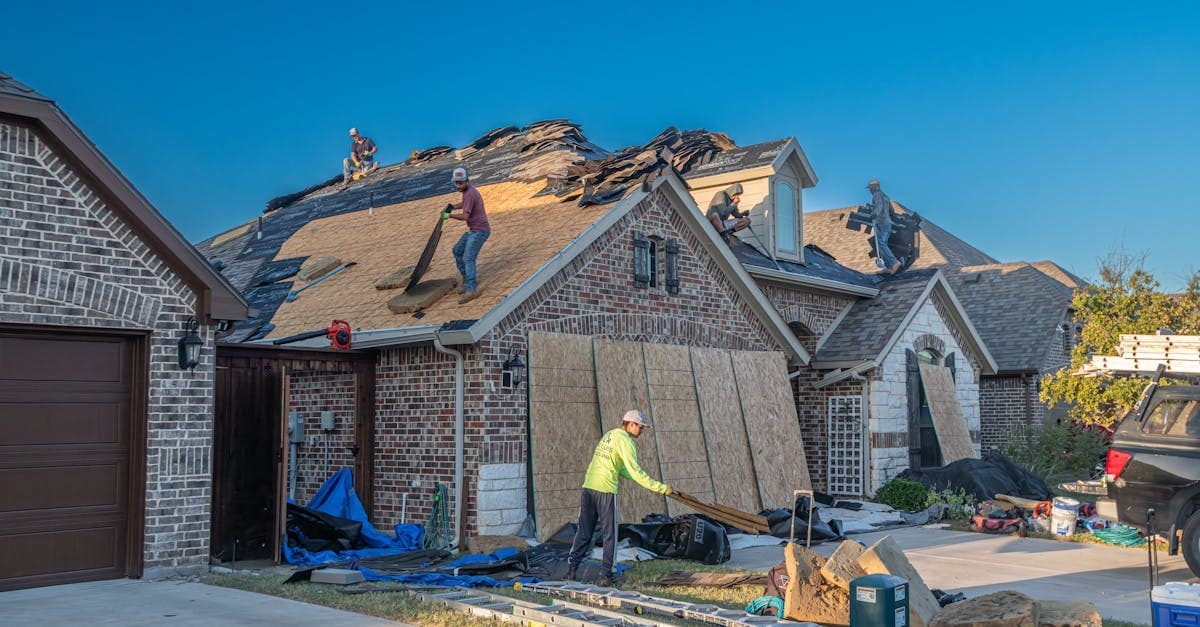
Photos matter more than most contractors expect. According to Hibu 2024, businesses with photos receive significantly more direction requests and website clicks than those without. For a roofer, that means job-site photos showing completed work, before-and-after comparisons, and even crew shots add credibility and feed the profile activity signals that Google tracks. A profile that has not been touched in six months looks dormant to the algorithm and gets treated accordingly. For a broader guide on profile photography, see Google Business Profile Photos Guide for Service Businesses.
How do reviews affect where a roofing company ranks in Google Maps?
Reviews are not just reputation management. They are ranking infrastructure. According to Google Support 2024, review quantity, review quality, and the recency of reviews all influence where a business appears in local search results. A roofing contractor with 80 reviews averaging 4.7 stars will generally outrank a competitor with 12 reviews averaging 4.9 stars, all else being equal, because volume signals that real customers are actively choosing and evaluating the business.
According to Hibu 2024, homeowners researching roofers rely heavily on reviews to make the decision to call at all. Roofing is a high-ticket, infrequent purchase where the customer has no prior relationship with the contractor. Reviews substitute for word-of-mouth for the large share of homeowners who found the business through search rather than a neighbor referral. A contractor with a strong profile and thin reviews loses to a competitor with a weaker website but a dense review record almost every time.
The practical implication is that review generation should be a consistent operational habit, not a one-time campaign. Asking every satisfied customer for a review immediately after the job closes, before the experience fades, produces a steady inflow that compounds over time. According to Roofing Today 2024, contractors who build this request into their post-job communication process see review counts grow steadily while competitors with inconsistent ask rates stagnate. For templates that make this easy, Google Review Request Text Message Templates offers ready-to-use options.
Does responding to reviews actually change anything operationally?
Yes, and in two distinct ways. First, responding to reviews is an active signal to Google that the business is engaged and managed. According to Google Support 2024, businesses that respond to reviews are considered more reputable in local ranking calculations. Second, responses are read by prospective customers. A homeowner scanning a roofing contractor's profile will read how the company handled a complaint or a glowing review just as carefully as the review itself.
According to Roofing Today 2024, contractors who respond promptly and professionally to negative reviews, acknowledging the concern and offering a resolution path, reduce the conversion damage of that review significantly. A 3-star review with no response looks like indifference. The same review with a measured, professional reply signals that the company takes accountability, which is exactly what a homeowner wants to know before handing someone access to their roof.
Responses do not need to be long. A two-sentence acknowledgment on a positive review and a clear, calm reply on a critical one covers the bases. The consistency matters more than the word count. Contractors who develop a simple habit of checking and responding weekly keep the profile active without it becoming a second job.
Why This Matters for Roofing Companies
The roofing market is competitive in nearly every metro area, and most homeowners do not have a go-to roofer before something goes wrong. The contractor who appears at the top of Google Maps with 60-plus recent reviews and a fully filled-out profile wins the call before the homeowner even visits a website. According to Hibu 2024, roofing contractors who treat their Google Business Profile as a living marketing asset, updating it regularly with photos, responding to reviews, and keeping information accurate, consistently outperform competitors who set it once and forget it.
This is also not a one-time fix. A profile that ranked well last spring can slip by fall if competitors are more active. Google rewards recency and engagement, which means the work is ongoing. The good news is that the baseline tasks, adding photos after jobs, asking customers for reviews, and responding to what comes in, are manageable without a marketing budget. They just require consistency.
The contractors gaining the most ground in local search right now are not the ones spending the most on ads. They are the ones with the most complete profiles and the steadiest flow of honest, recent reviews. That is a competition any well-run roofing company can win.